

Reports: Windows 10X will remove Win32 support as focus shifts to a ‘Cloud PC’ - haileysiond1936
Reported to reports, Microsoft is even more explicitly pushing its upcoming Windows 10X as a competitor for Chromebooks and Chrome OS, retooling it to eliminate support for legacy code. Microsoft too plans a "Mottle PC" running apps from the cloud, they say. All this will have significant personal effects on Windows 10, which may slow its development cycle even up more.
Reports from ZDNet on the Windows roadmap rescheduling and the cloud efforts, as intimately as Windows Central's own coverage along both efforts, seem to support the conclusion we reached when the Surface Neo was delayed and dual-screen devices were pushed out to 2021: that Windows 10X essentially is the newfangled Windows 10 S.
Microsoft began showing bump off Windows 10X earlier this year, and positioned it as a specific flavor of Windows 10 optimized for a new wave of dual-riddle Windows 10 devices. But so the epidemic hit, and Microsoft began rethinking its plans. Now, Microsoft's roadmap and positioning of Windows 10X versus Windows 10 and even Windows 10 S are seemly clearer.
Here's what you need to know.
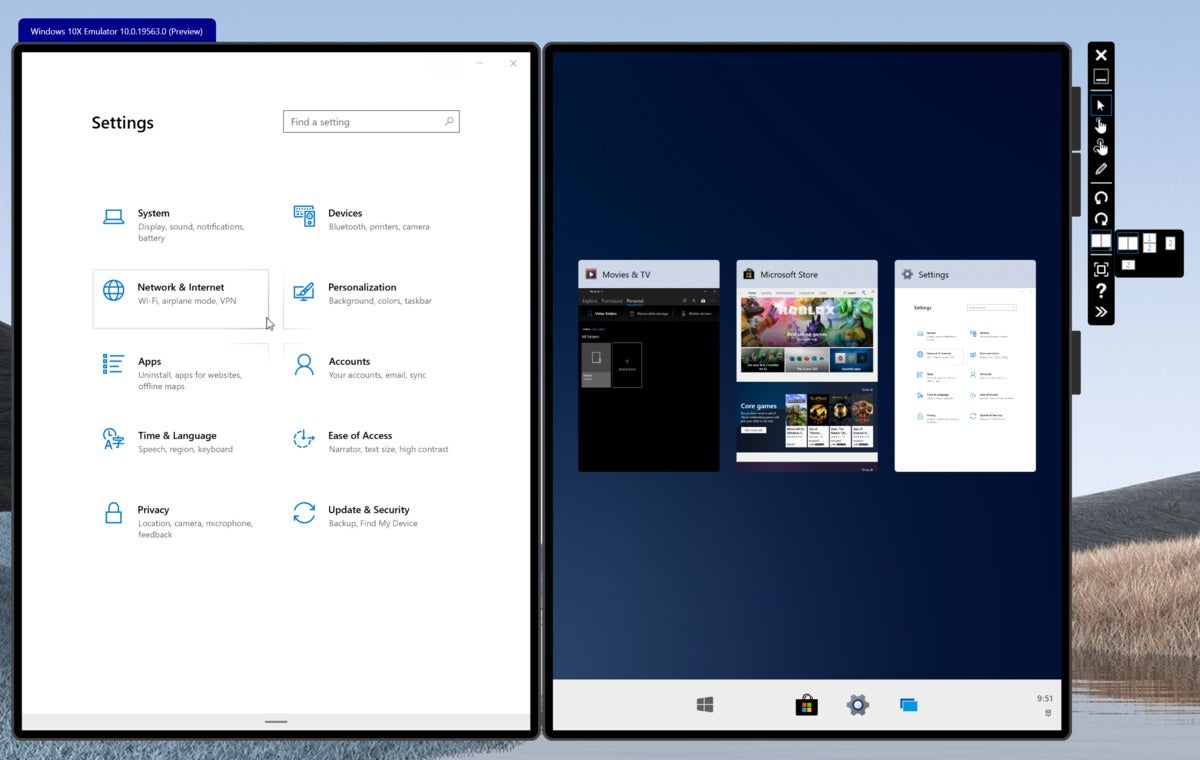 Mark Hachman / IDG
 Windows 10X was once an Oculus sinister specifically for dual-screen devices. Now, not so much.
1. Nonentity happens until 2021
The reports seem to agree that slight is happening until 2021. ZDNet's Zac Bowden reports that Windows 10X will be finished up in late 2020 and debut on a dedicated Microsoft device, such As a Superficial Go 3. ZDNet's Mary Jo Foley reports that Windows 10X leave be released for several-screen devices beginning in 2021, and for dual-screen devices in 2022. We've identified previously that Microsoft's Surface Neo was "paused" as Microsoft reassessed the dual-CRT screen device landscape.
Likewise on the horizon: ZDNet is reporting that in spring 2021, Microsoft will add something new: a "Cloud PC," primarily aimed at businesses. More on this in a bit.
2. Windows 10X's big change
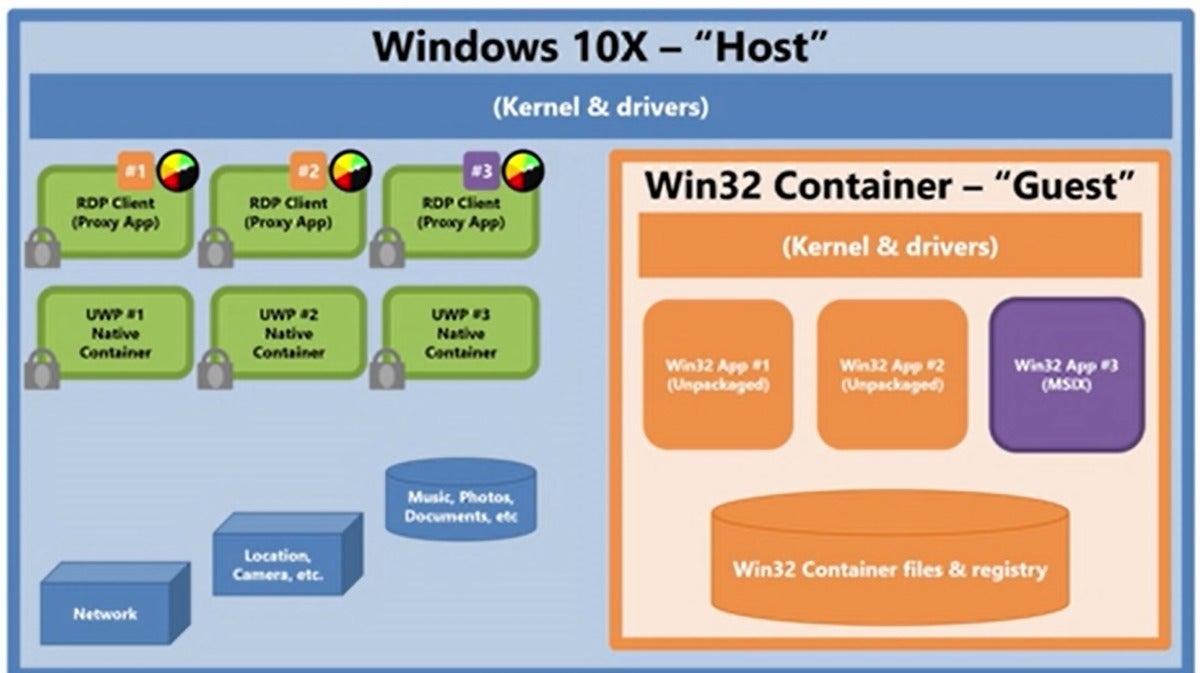
The other big piece of news is that Windows 10X is reportedly dropping unity of its coolest pieces of technology: the "container" that would suffer allowed it to foot race Win32 apps in a virtualized mode. Windows 10X was important for its streamlined design that was originally optimized for dual-screen PCs. Under the hood, however, Windows 10X apparently shared a lot of the design goals with Windows 10 S: provide a managed environment for running play trusted apps from the Microsoft Store natively, and use a sandboxed "container" to support the vast ecosystem of legacy Win32 apps.
 Microsoft
 This is the diagram Microsoft used to describe how Win32 support would be handled by Windows 10X: via a virtualized container.
With Microsoft's late decision, however, Windows 10X will run Universal Windows Platform (UWP) and web apps only—drastically confining its appeal to mainstream users. On the other reach, you'll still be able to run apps like Spotify, as long as they can run in spite of appearanc a Network pageboy or a UWP app like-minded Twitter. This could all change in 2022, when Microsoft may revisit the container model, ZDNet's Mary Jo Foley reports. Merely that's the plan of record for now.
3. Fewer features for Windows 10, potentially
Microsoft has a finite keep down of developers, and the disconnected betwixt Windows 10X, Windows 10, and (apparently) the Windows Fog PC means that Microsoft plans to formalise a practice that has already become substance abuse: new Windows 10 features will be released in the fall, while inexperient Windows 10X features will be prioritized for the spring, ZDnet reports. For Windows 10 users, this would swap the current release schedule, where more substantive features are delivered in the rebound, and the drop away is holy to patching and updating older code.
 Microsoft
 Microsoft has chased this rather "feature, past spell" discharge strategy since 2019. As of now, there are few raw features that have been publically engaged to the approaching Windows 10 Slow/Beta Channel of Windows Insider releases for 20H2, due sometime this fall. (Microsoft also straightaway has a separate Dev Channel, where it tests approaching code with no specific release date or build attached.)
If you're a fan of new Windows features, you'll believably be disappointed. Those WHO would prefer Windows move out lento and emphasize patching and overall stability, all the same, will be more enthusiastic.
4. Windows 10X looks even more like a Chromebook challenger
While the vast absolute majority of consumer and enthusiast Microcomputer runs Windows 10, that's not the same for Chromebooks, which quietly replaced Apple iPads and Macs in American classrooms individual geezerhood ago. Businesses, too, need low-cost PCs for then-called "advance-line workers," without all of the overhead that fire accompany Windows PCs. Information technology sounds like Windows 10X may be the solvent for the first group, with Dapple PCs answering the needs of businesses, as well as some overlap betwixt the two.
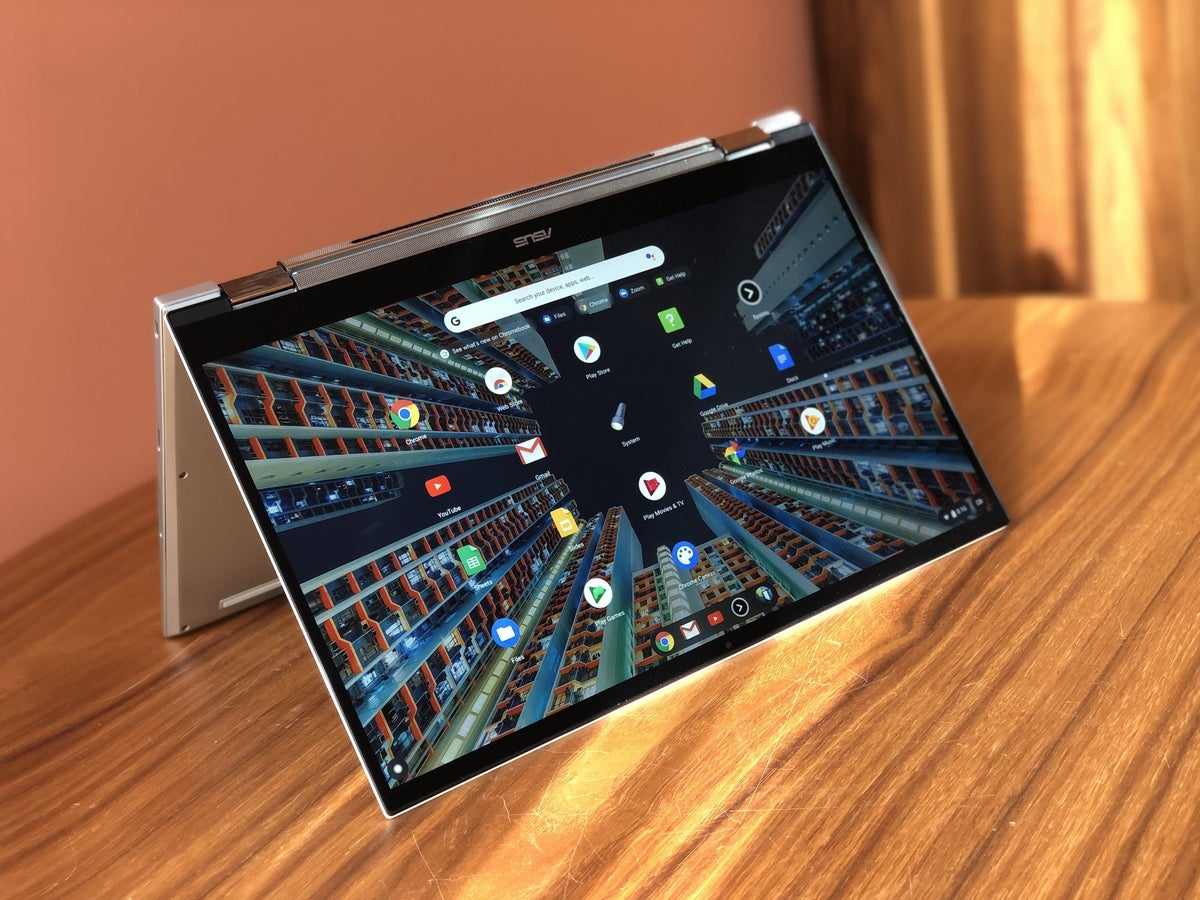 Melissa Riofrio/IDG
 Microsoft has been mildly obsessed with Chromebooks, trying and failing repeatedly to oust them from K-12 classrooms in America. (Worldwide, the competition is more even.)
"Originally designed as an Bone for flagship superior PCs in the foldable space, Windows 10X testament now live launching at the very other stop of the spectrum, on low-cost tablets and laptops studied for the education and enterprise markets," Windows Central writes.
Without the Win32 container technology, location Windows 10X at the low end of the market was almost a foregone conclusion. But Windows Central reported that it was difficult if not impossible to get Windows 10X to run containerized/virtualized apps on low-end hardware, forcing Microsoft to strip out that technology and reposition Windows 10X as a low-end OS. That restriction may have affected Microsoft's hand.
5. Cloud PCs: Windows as a service is here
We've written before how virtualization could follow the key to many of Microsoft's future directions, including adapting the App-V model of streamed apps. Microsoft's approaching "Cloud PC" could be the answer to that. While the concept isn't really anything new—thin clients have existed for years, with apps sent down from the cloud for users to interact with locally—this is Microsoft's latest swing at the idea.
Remember, businesses want a easy, managed computer science environment that they can scarcely deploy and forget, and are willing to pay for. Both Windows Central and ZDNet seem to agree that Microsoft testament habit its Windows Virtual Desktop American Samoa a political platform to allow for businesses to tally outback apps stored in the cloud.
 Microsoft
 Microsoft's Project xCloud already streams games from the swarm, so a worldwide where users stream a virtualized app doesn't look that farther-fetched. All with the pat subscription, of course.
We also have the most solid proof that a "Cloud PC" exists—because, as ZDNet noted, Microsoft's hiring for it.
"Microsoft's vision of Cloud PC is that IT is the only if M 365 [Microsoft 365] powered user compute experience delivered from sky-blue and managed by Microsoft—at a insipid per user price," the job posting says. " Microsoft Cloud Personal computer is a strategic, inexperienced offer that is assembled along top of Windows Virtual Desktop to delivering Background American Samoa a Religious service . At its core, Cloud PC provides business customers a current, elastic, cloud-based Windows go through and will allow organizations to stay current in a more simplistic and ascendible personal manner."
Can we envisage that you'll beryllium performin the up-to-the-minute Outcry of Duty streamed from the cloud? Of course non—and, cured, yes. PCs are built on apps stored on a user's hardened ram down, but the Xbox and Picture xCloud stream games from the cloud—and they're a reality. Information technology's real possible that this weird mashup of topical and remote apps, virtualization, and subscriptions bequeath go along.
Source: https://www.pcworld.com/article/393225/reports-windows-10x-will-remove-win32-support-as-focus-shifts-to-a-cloud-pc.html
Posted by: haileysiond1936.blogspot.com
0 Response to "Reports: Windows 10X will remove Win32 support as focus shifts to a ‘Cloud PC’ - haileysiond1936"
Post a Comment